
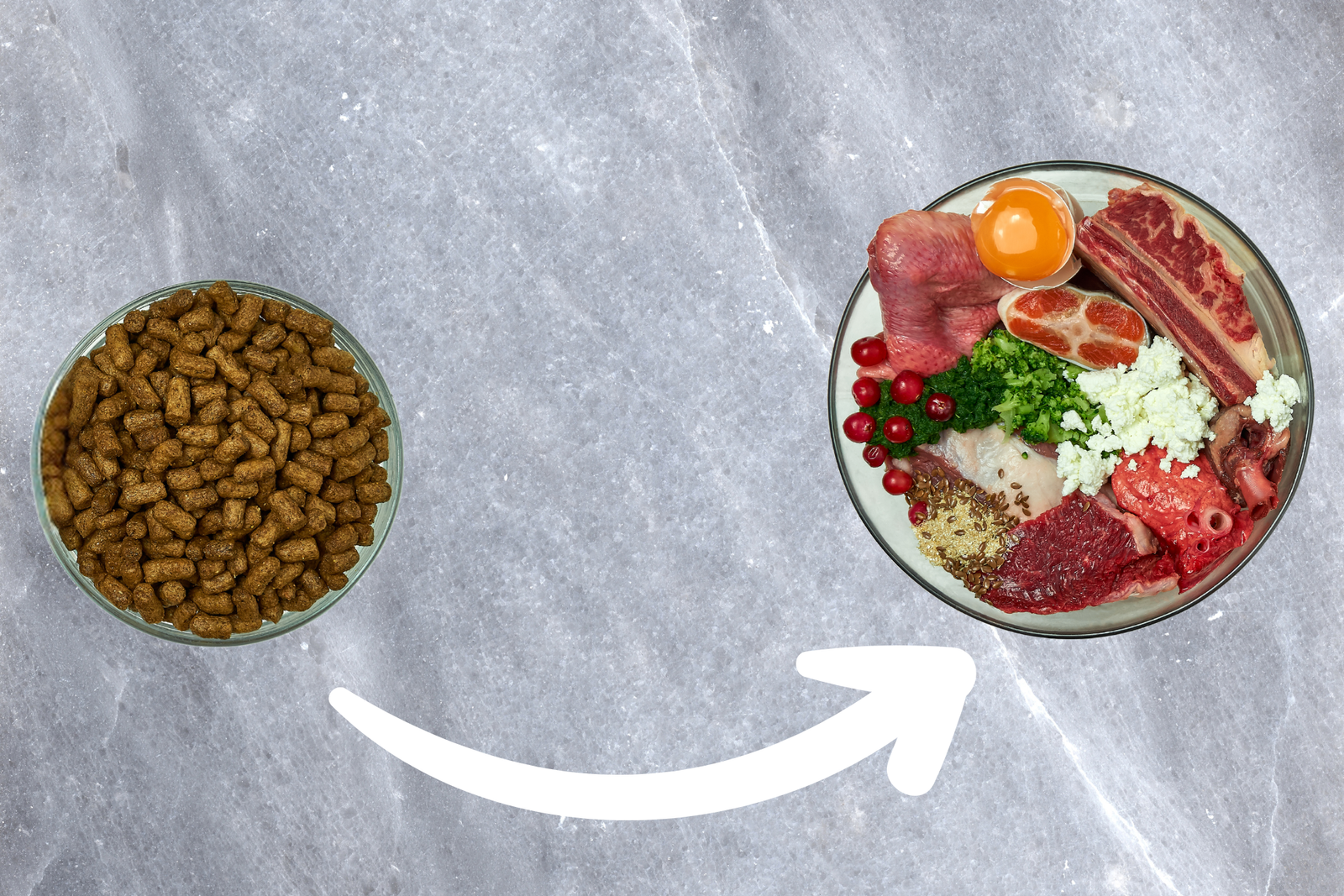
How to Transition to Raw Food
Switching your dog to a raw diet is straightforward. It is recommended making a complete transition from your dog’s current diet to raw food by doing a direct swap, or “going cold turkey.”
It is advised against mixing raw food with kibble or tinned food to avoid digestive issues. A dog’s stomach is naturally acidic, making it well-suited to a raw diet that includes digesting bone efficiently.
To begin, feed your dog the last meal of their current diet in the evening and start with raw food the next morning, following their usual feeding routine.
During the transition, your dog may need time to adjust as they undergo a detoxification process. Monitor their overall well-being and stools, and ensure they always have access to fresh water.
How Much to Feed:
Adults (over one year old):
Feed 2-3% of your dog’s current body weight per day. This can be fed in one meal or divided into two meals. For example, a 30 kg dog should eat 600-900 grams per day, split into 300-450 grams per meal if fed twice daily.
Each dog is unique, and their diet should be tailored to their specific needs. Adjust the amount based on their activity level, age, breed, and other factors such as seasonal temperatures. For example, working dogs will require more food than less active pets. Different proteins have varying fat contents, so consider this when determining daily feeding percentages. If you want your dog to lose or gain weight, feed 2-3% of their target body weight per day. Click here for guidance on dog weight.
Puppies (under one year old):
Raw feeding provides puppies with the nutrients they need to thrive. Feed based on their body weight at specific age milestones:
- 2-4 months: 10%-8% of body weight per day
- 4-6 months: 8%-6% of body weight per day (reduce feedings from three times to twice daily at 4 months)
- 6-8 months: 6%-4% of body weight per day
- 8-12 months: 4%-3% of body weight per day
Adjust the amounts based on how your puppy responds, considering their individual dietary, digestive, and activity needs.
What to Feed:
For a balanced raw diet, follow the 80/10/10 approach: 80% muscle meat, 10% bone, and 10% offal (5% liver and 5% other offal).
Options for raw feeding include:
- DIY: Chop and weigh chunks of meat, bones, and offal at the required percentages.
- Pre-prepared Minces: 80/10/10 or 80/20 minces that include vegetables, fruits, and supplements.
- Combination: Use a mix of the above methods to ensure balanced nutrition over time.
For convenience, we suggest using pre-prepared 80/10/10 or 80/20 minces to ensure your dog gets a balanced diet and to help you adapt to raw feeding.
Transition Plan:
During the first five weeks, feed one type of protein each week. This helps your dog adjust and allows you to identify potential allergies. After the transition period, provide variety with at least five different proteins on rotation each week.
Additional recommendations:
- Introduce raw frozen fish twice a week.
- Include raw organic eggs with the shell once or twice a week.
- If adding vegetables, steam and blend them to break down the cellulose walls. Feed vegetables on top of your dog’s specific meal allowance.
- Avoid onions, corn on the cob, and raw potatoes.
- Consider nutritional supplements for convenience.
Transition Period Steps:
- Week 1: Feed a chicken or turkey complete (80/10/10) mixed 50/50 with beef or lamb tripe.
- Following Weeks: Introduce a new meat complete (80/10/10) such as duck, beef, lamb, or veal each week. Introduce fish and meaty bones appropriate to your dog’s size and chewing style after week 5.
Monitoring Progress:
Check your dog’s stool to gauge their adjustment. Ideal stool should be firm but not too hard or soft. Adjust the bone and tripe content in the diet if necessary.
Additional Considerations:
- Adjust percentages based on your dog’s metabolism, activity levels, and dietary needs.
- Expect reduced water intake and smaller, less frequent stools due to the natural moisture and fewer waste products in raw food.
- If your dog experiences “hunger pukes,” offer a small, low-fat treat at night.
For optimal results, consult with a raw feeding expert to ensure your dog transitions smoothly to a balanced raw diet.
Start your dog’s raw food journey, and head to our online shop.